EBOOK
A Lens and Language for Reframing Burnout and Living in Alignment
The Burn In Model©

This 50-page eBook takes you inside The Burn In Model© — exploring the flame, the ecosystem and the story behind it.
Grounded in occupational science, humanism, and ecological systems thinking, The Burn In Model© provides a shared lens and language for exploring well-being, engagement, and sustainable participation across work, life, and care.
Using the universal metaphor of fire, The Burn In Model© makes complex, often invisible experiences tangible—helping readers name what fuels them, what drains them, and what supports long-term alignment and growth. Designed for both conceptual understanding and an introduction to practical application, this eBook is equally relevant for personal reflection, clinical practice, education, leadership, and organizational development.
What’s inside:
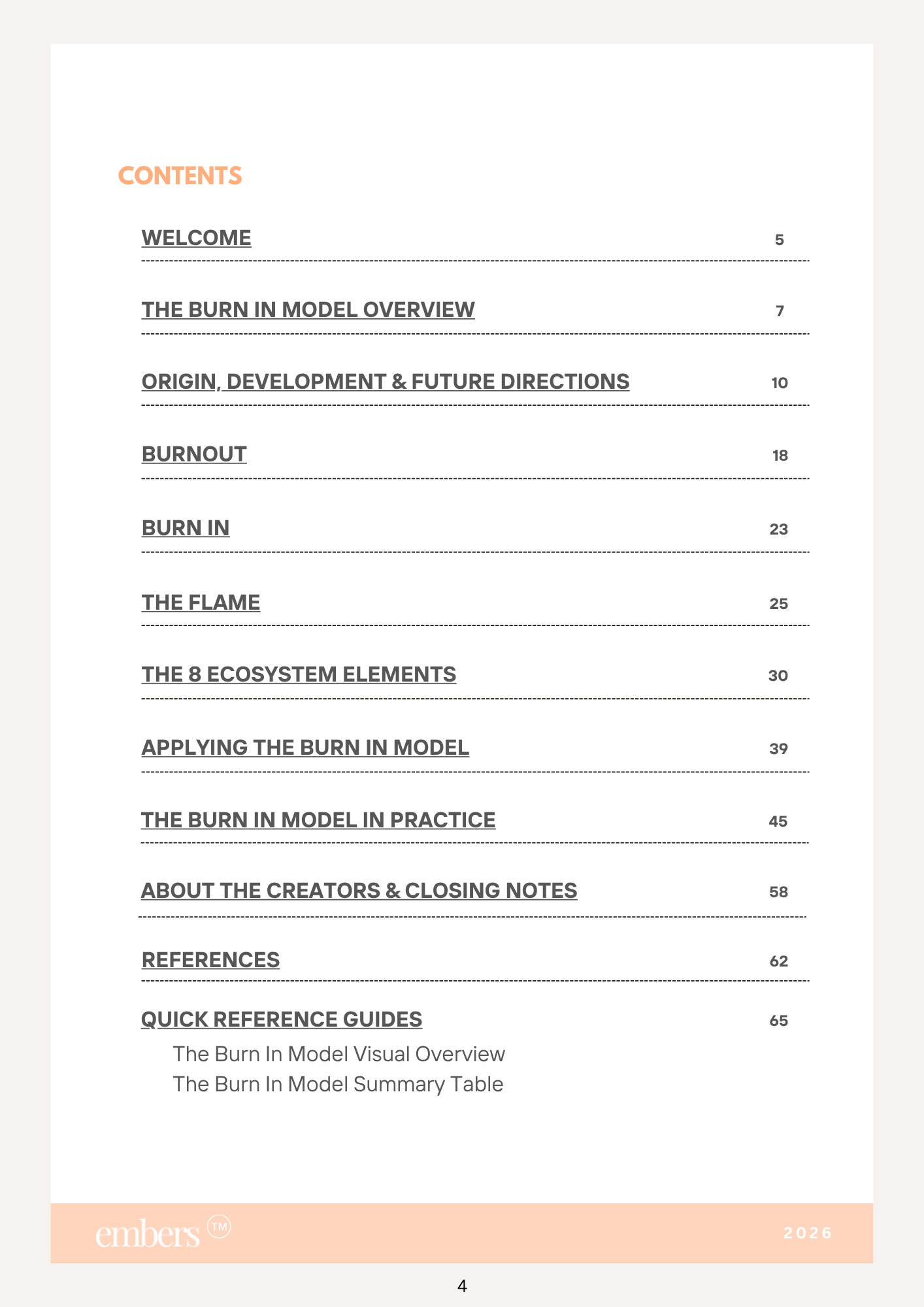
A clear overview of The Burn In Model©
A nuanced discussion of burnout, its limitations in current definitions, and a reframed understanding grounded in alignment
An introduction to Burn In as a state of strong alignment and thriving
A detailed breakdown of the Flame and the 8 Ecosystem Elements that influence alignment, engagement, and well-being
Practical guidance for applying The Burn In Model© in various contexts
Visual quick-reference guides included in the appendix for teaching, reflection, and applied use
$14.00 USD
Burnout is often framed as an individual failure to cope with stress. The Burn In Model© offers a different perspective—one that helps individuals, teams, and organizations understand burnout not as weakness, but as a signal of misalignment between who we are, what we do, and who and what we’re connected to.
Grounded in occupational science, humanism, and ecological systems thinking, The Burn In Model© provides a shared lens and language for exploring well-being, engagement, and sustainable participation across work, life, and care.
Using the universal metaphor of fire, The Burn In Model© makes complex, often invisible experiences tangible—helping readers name what fuels them, what drains them, and what supports long-term alignment and growth. Designed for both conceptual understanding and an introduction to practical application, this eBook is equally relevant for personal reflection, clinical practice, education, leadership, and organizational development.
What’s included:
A clear overview of The Burn In Model©
A nuanced discussion of burnout, its limitations in current definitions, and a reframed understanding grounded in alignment
An introduction to Burn In as a state of sustained alignment and thriving
A detailed breakdown of the Flame and the eight Ecosystem Elements that work together to influence alignment, engagement, and well-being
Practical guidance and case examples for applying The Burn In Model© in various contexts
Visual quick-reference guides included in the appendix for teaching, reflection, and applied use
Price is in USD.

IDEAS THAT IGNITE
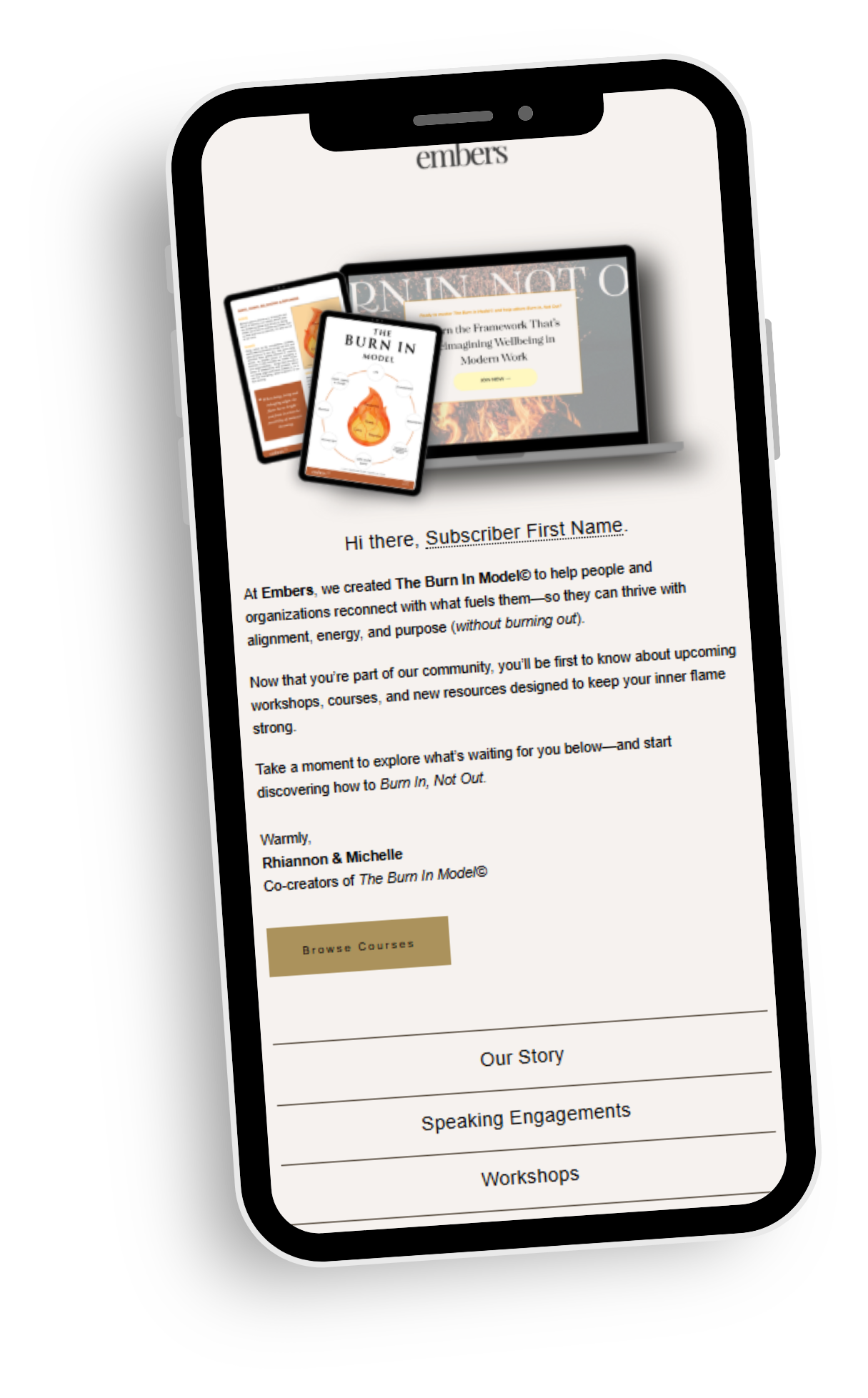
The Burn In Newsletter

Join a global community of individuals and organizations choosing to Burn In, Not Out. We’ll share honest reflections, real stories and research-backed practical ways to stay aligned in how you live, lead and work.